How to Minimise Hangovers: A Science-Backed Guide to Hydration, Nutrition, and Recovery
A practical, physiology-led guide for people who want to enjoy life without sacrificing energy, training, recovery, or long-term health.
Turning 30 has a way of shifting your priorities.
You still want to enjoy life. Socialise. Go out. Have a drink. But the difference now is awareness. You begin to notice how much your body pays for poor recovery decisions. A late night no longer just costs you a morning. It can impact your energy, your training, your focus, and your overall performance for days.
For many people, alcohol remains part of their lifestyle. The goal is not necessarily complete avoidance. The goal is control, understanding, and optimisation.
At Body Mechanics, we do not deal in extremes. We deal in results.
Our philosophy is simple: relieve pain and reach your potential.
That applies just as much to your lifestyle habits as it does to your training. Because the reality is this: you cannot out-train poor recovery. And one of the most misunderstood recovery disruptors is alcohol.
Why Most Hangover Advice Falls Short
The majority of hangover advice online is surface-level. Drink water. Eat greasy food. Take this supplement. The problem is that most of these suggestions do not explain what is actually happening inside your body.
A hangover is not just dehydration. It is not just drinking too much. It is a complex, multi-system physiological response involving toxic byproduct accumulation, hormonal disruption, nervous system imbalance, metabolic interference, immune activation and sleep architecture breakdown.
Without understanding these mechanisms, most strategies are reactive at best and ineffective at worst.
The Performance Perspective
From a performance standpoint, alcohol creates a unique challenge. It does not just add calories. It changes how your body functions for the next 12 to 48 hours.
Reduced muscle protein synthesis
Impaired glycogen replenishment
Increased inflammation
Suppressed recovery hormones
Disrupted sleep cycles
Reduced coordination, focus and training quality
For someone training regularly, this matters. It means you can be doing many of the right things in the gym, yet still limiting progress outside of it.
A Smarter Approach
This guide is built differently. Instead of focusing on quick fixes, we break down what happens when you drink alcohol, what a hangover really is from a physiological standpoint, how to reduce the impact through hydration and nutrition, and how to recover without compromising your progress.
The aim is not perfection. It is informed decision-making. Once you understand what your body is dealing with, the strategy becomes obvious.
Who This Guide Is For
People who train regularly and care about performance
People who want to maintain a social life without sacrificing results
People who are starting to notice the cost of poor recovery
People who value practical, science-backed advice
It is also for anyone who has ever thought: why does this hit me so much harder than it used to?
How Alcohol Is Processed in the Body: From First Sip to Breakdown
To understand how to minimise a hangover, you need to understand one thing clearly: your body treats alcohol as a toxin, not a nutrient.
Unlike carbohydrates, fats, or protein, alcohol cannot be stored or used efficiently. The body’s priority is immediate: break it down, neutralise it, and remove it. Everything else becomes secondary.
Step 1: Absorption
Alcohol, also known as ethanol, is absorbed into the bloodstream through the stomach and small intestine. A smaller proportion is absorbed through the stomach, while the majority is absorbed through the small intestine. This is why drinking on an empty stomach can produce faster intoxication and a higher peak blood alcohol concentration.
Food slows gastric emptying, delaying alcohol’s entry into the small intestine and reducing how sharply blood alcohol rises. This is one reason nutrition before drinking is so powerful.
Step 2: Distribution
Once absorbed, alcohol distributes through body water. Because ethanol is both water-soluble and lipid-soluble, it crosses cell membranes and the blood-brain barrier easily. This is why effects are felt rapidly in the brain, including reduced inhibition, slower reaction time, altered coordination and impaired judgement.
From a physiology standpoint, alcohol is a central nervous system depressant. The relaxed feeling many people experience is partly the result of alcohol changing neurotransmitter activity in the brain.
Step 3: Liver Metabolism
The liver performs most of the work. Alcohol metabolism happens primarily in two stages.
Stage 1: Ethanol to Acetaldehyde
The enzyme alcohol dehydrogenase converts ethanol into acetaldehyde. Acetaldehyde is highly reactive, toxic to cells and pro-inflammatory. It is one of the key compounds linked with nausea, flushing, headaches, increased heart rate and general malaise.
In simple terms, acetaldehyde is more harmful than alcohol itself.
Stage 2: Acetaldehyde to Acetate
The enzyme aldehyde dehydrogenase converts acetaldehyde into acetate. Acetate is far less harmful and can then be broken down further into carbon dioxide and water.
Why This Process Creates Hangovers
This system is rate-limited. The liver can only process alcohol at a limited speed. When intake exceeds clearance capacity, acetaldehyde and other stress signals accumulate. Toxic load increases, oxidative stress rises and hangover severity tends to worsen.
This is why drinking speed matters. Two people can drink the same total amount but feel very different the next day depending on pace, food intake, hydration status and individual metabolism.
The Hidden Driver: NADH and Metabolic Disruption
Alcohol metabolism alters liver chemistry by increasing the ratio of NADH to NAD+. This sounds technical, but it has real-world consequences for fat metabolism, blood sugar control and energy production.
Fat Metabolism Is Suppressed
When alcohol is being processed, the body prioritises clearing it. High NADH levels reduce fat oxidation and shift the body toward storing rather than burning fat. Alcohol does not need to turn directly into body fat to slow fat loss. It can slow progress because fat burning is suppressed while alcohol is being metabolised.
This becomes especially relevant when alcohol is paired with high-calorie, high-fat food. In that state, dietary fat is more likely to be stored because the body is busy dealing with alcohol.
Blood Sugar Regulation Is Disrupted
Alcohol can inhibit gluconeogenesis, the process by which the liver produces glucose. This can contribute to low blood sugar, fatigue, dizziness, irritability and brain fog, especially the morning after drinking.
Lactate Can Increase
The altered NADH to NAD+ ratio can promote conversion of pyruvate to lactate. This can contribute to fatigue and reduced energy availability.
The Microsomal Ethanol Oxidising System
Alongside alcohol dehydrogenase, the body can also metabolise alcohol through the microsomal ethanol oxidising system, involving cytochrome P450 enzymes, particularly CYP2E1. This pathway becomes more active with higher or repeated alcohol intake.
The issue is that this pathway can produce reactive oxygen species. These increase oxidative stress and add another layer to hangover physiology: inflammation plus oxidative damage.
Individual Differences: Why Some People Suffer More
Genetics matter. Variations in aldehyde dehydrogenase activity affect how quickly acetaldehyde is cleared. Some people naturally process acetaldehyde less efficiently, which can lead to more flushing, nausea, headaches and severe hangover symptoms from lower amounts of alcohol.
Congeners: Why Some Drinks Feel Worse
Not all alcoholic drinks are equal. Congeners are chemical byproducts formed during fermentation and ageing. They include compounds such as methanol, tannins and acetone-related substances.
Darker drinks such as whiskey, brandy, red wine and some dark spirits generally contain higher congener levels. Clear spirits such as vodka and gin tend to contain fewer congeners. This does not make them harmless, but it can partly explain why different drinks produce different next-day outcomes.
What a Hangover Actually Is: A System-Wide Stress Response
Most people simplify hangovers to dehydration. That is only one piece of the puzzle. A hangover is a multi-system physiological response involving fluid imbalance, toxic byproduct accumulation, inflammation, hormonal disruption, nervous system rebound, sleep disturbance and gut dysfunction.
1. Dehydration and Electrolyte Imbalance
Alcohol suppresses vasopressin, also known as antidiuretic hormone. This hormone normally helps the kidneys retain water. When it is suppressed, urine production increases, fluid loss accelerates and electrolytes are lost alongside water.
This can reduce blood volume, lower blood pressure and impair oxygen and nutrient delivery. The result is often headache, dizziness, fatigue and reduced physical performance.
2. Acetaldehyde Toxicity
If acetaldehyde accumulates faster than your body can clear it, cellular stress rises. Acetaldehyde can interfere with normal cellular processes and increase oxidative stress. This contributes to headaches, nausea, flushing, increased heart rate and the general feeling of being poisoned.
3. Inflammation and Immune Activation
Alcohol can trigger inflammatory signalling, including cytokines such as interleukin-6 and tumour necrosis factor-alpha. These signalling molecules are associated with the sickness response, which includes fatigue, low mood, reduced motivation and impaired cognition.
A hangover can feel like being mildly ill because, physiologically, the body is responding in a similar way.
4. Blood Sugar Disruption
Alcohol interferes with the liver’s ability to regulate blood glucose. This is worse if you drink on an empty stomach, drink heavily, or have low glycogen stores from hard training. Symptoms can include shakiness, irritability, brain fog, reduced concentration and low energy.
5. Neurotransmitter Rebound
Alcohol increases GABA activity, which is calming and sedating, and suppresses glutamate, which is excitatory. As alcohol leaves the system, the brain compensates. GABA activity can drop and glutamate can rebound. This contributes to restlessness, poor sleep, increased stress and hangover anxiety.
6. Sleep Architecture Breakdown
Alcohol can make you feel sleepy, but it is not a true recovery tool. It disrupts REM sleep and can fragment sleep throughout the night. Even if total sleep duration looks acceptable, recovery quality can be poor.
This matters because sleep is when many recovery processes happen, including tissue repair, hormone regulation, memory consolidation and nervous system restoration.
7. Gut Health and Digestive Disruption
Alcohol can irritate the stomach lining, alter gut motility, disrupt the microbiome and increase intestinal permeability. This can contribute to nausea, digestive discomfort and systemic inflammation.
Repeated exposure may affect nutrient absorption and recovery capacity over time, which is why gut health is relevant to performance, not just digestion.
8. Cardiovascular Effects
Alcohol can increase heart rate, influence blood pressure and place extra strain on circulation, particularly when dehydration is present. This is one reason some people feel their heart pounding the morning after drinking.
9. Hormonal Disruption
Alcohol can influence cortisol, testosterone and growth hormone. Heavy drinking can elevate cortisol, create a more catabolic environment, temporarily reduce testosterone and suppress growth hormone indirectly through poor sleep quality.
The combined effect is reduced recovery, impaired muscle repair and lower training output.
Why Hangovers Feel Different Every Time
Hangover severity is influenced by hydration status, food intake, sleep quality, drink type, drinking speed, genetics, stress, training load and overall health. The same number of drinks can produce very different outcomes depending on context.
Hydration Science: Why Water Alone Is Not Enough
Hydration is not simply about how much fluid you consume. It is about how effectively your body absorbs, distributes and retains that fluid. After alcohol consumption, all three can be compromised.
Why Alcohol Causes Dehydration
By suppressing vasopressin, alcohol increases urine output and causes fluid and electrolyte loss. The result can be reduced plasma volume, impaired circulation, dizziness, fatigue and headaches.
The Problem With Plain Water
Drinking water can help, but water alone does not always restore fluid balance effectively. Without electrolytes, particularly sodium, water may not be retained well. In some contexts, large amounts of plain water can dilute plasma sodium further and leave people still feeling flat.
The Sodium-Glucose Co-Transport System
Fluid absorption in the small intestine is partly driven by sodium-glucose co-transport, often discussed through SGLT1. Sodium and glucose are transported together across the intestinal wall, and water follows through osmosis. This is the principle behind oral rehydration solutions.
This explains why electrolyte products that include sodium and a small amount of carbohydrate can be useful when the goal is rehydration rather than just thirst relief.
Electrolytes: What You Actually Need
Sodium: the key electrolyte for fluid retention, blood volume and nerve function
Potassium: supports cellular function and muscle contraction
Magnesium: supports muscle relaxation, nervous system regulation and sleep quality
For hangover minimisation, sodium is usually the most important electrolyte to consider. If sodium intake is too low, hydration will be less effective regardless of how much water is consumed.
Practical Hydration Protocol
Electrolyte Options
Liquid I.V. Hydration Multiplier is one practical option because it combines sodium and glucose, aligning with the sodium-glucose co-transport mechanism. Other quality electrolyte powders can also work, especially those with meaningful sodium content. Coconut water may help provide potassium, but it is often lower in sodium than most people need for effective rehydration.
A simple DIY option is water with a pinch of salt, citrus juice and a small amount of honey. This is not a medical oral rehydration formula, but it follows the same basic principle of fluid plus electrolytes plus a small amount of carbohydrate.
Common Hydration Mistakes
Drinking only water and ignoring sodium
Waiting until symptoms appear before hydrating
Relying on sugary drinks that worsen blood sugar swings
Using caffeine before restoring fluids and electrolytes
Nutrition Strategy: Before, During and After Drinking
Hydration is critical, but nutrition determines how quickly alcohol enters the bloodstream, how stable your energy remains and how severe the physiological disruption becomes. Most people think about food after drinking. The real advantage comes from what you do before.
Why Food Matters
Alcohol absorption is influenced by gastric emptying rate, blood sugar stability and the speed at which alcohol reaches the small intestine. When you drink on an empty stomach, alcohol enters the small intestine faster, absorption accelerates and blood alcohol concentration peaks higher. This increases acetaldehyde production, toxic load and hangover risk.
Pre-Drinking Nutrition: Build a Buffer
The ideal pre-drinking meal contains protein, healthy fats and complex carbohydrates. Protein provides amino acids for metabolic processes. Fats slow gastric emptying. Carbohydrates support blood glucose and glycogen availability.
Chicken, rice and avocado
Eggs, sourdough and olive oil
Salmon, potatoes and vegetables
Greek yoghurt, oats, berries and nuts
A good target is 60 to 90 minutes before drinking.
During Drinking: Reduce Additional Stress
Avoid high-sugar mixers where possible. Sugary drinks can create rapid blood glucose spikes followed by crashes, worsening fatigue, brain fog and energy instability. Simpler drink choices, lower sugar mixers and lower-congener options often reduce the total stress on the system.
Alcohol also reduces inhibition and can increase appetite. This is why late-night food choices often become calorie-dense, high-fat and low in nutrients.
Late-Night Eating: The Real Issue
The problem is not eating after drinking. The problem is what is typically eaten. A high-fat, high-calorie meal combined with alcohol creates a poor metabolic environment: alcohol is prioritised, fat burning is suppressed and dietary fat is more likely to be stored.
If eating late, choose protein plus carbohydrates and keep fats moderate. Examples include a chicken wrap, eggs on toast, Greek yoghurt with fruit, or rice with lean protein.
Post-Drinking Nutrition: Rebuild the System
The morning after, the goal is to stabilise blood sugar, restore glycogen, support liver function and reduce inflammation. A recovery meal should include protein, complex carbohydrates and micronutrient-rich foods.
Protein: eggs, lean meat, Greek yoghurt, protein shake if appetite is low
Carbohydrates: oats, rice, potatoes, fruit, sourdough
Micronutrients: leafy greens, berries, nuts, seeds and whole grains
Gut Health Support
Because alcohol can disrupt gut integrity and microbiome balance, recovery nutrition should also support the gut. Fibre-rich foods, polyphenol-rich foods and fermented foods such as yoghurt or kefir can help support a healthier recovery environment.
Why Greasy Food Does Not Cure Hangovers
Greasy food does not accelerate alcohol metabolism or remove toxins. It may provide temporary comfort and, if alcohol is still in the stomach, it may slow further absorption. But high-fat meals post-drinking can also slow digestion, increase nausea and contribute to lethargy.
Supplements: What Helps and What Is Overhyped
Supplements are multipliers, not fixes. No supplement will outwork poor hydration, nutrition or sleep. Used correctly, they can support physiology by improving hydration efficiency, supporting antioxidant capacity, reducing inflammation and helping nervous system recovery.
Electrolytes
Electrolytes are the foundation. They restore fluid balance, support nerve and muscle function and improve hydration retention. Liquid I.V. or similar products can be useful because they combine sodium and glucose. The key is not the brand alone, but the mechanism: fluid, sodium and an appropriate carbohydrate source.
Magnesium
Alcohol can increase urinary magnesium loss. Low magnesium may contribute to muscle tension, poor sleep, headaches and an elevated stress response. Magnesium glycinate is a practical option for sleep and relaxation. Magnesium threonate is another option often discussed for nervous system support.
B Vitamins
Alcohol metabolism places demand on several B vitamins, particularly thiamine, B6 and B12. Whole food intake should come first, but a high-quality multivitamin or B-complex may be useful for people with low intake or after heavier drinking periods.
N-Acetylcysteine
N-acetylcysteine, often called NAC, is a precursor to glutathione, one of the body’s major antioxidant systems. It is most logically used before drinking rather than once damage has already occurred. Anyone on medication or with health conditions should check suitability with a qualified professional.
Omega-3 Fatty Acids
Alcohol increases inflammatory signalling. Omega-3 fatty acids can help support a healthier inflammatory balance over time. They are not an immediate hangover cure, but they can form part of a more resilient nutrition foundation.
Caffeine
Caffeine can improve alertness, but it can also increase anxiety, irritate the stomach and worsen the feeling of being wired but tired. Use caffeine strategically, only after fluids, electrolytes and food are in place.
Painkillers: Use With Caution
Paracetamol is processed by the liver and should be used cautiously around alcohol due to liver strain. NSAIDs such as ibuprofen can irritate the stomach lining and may worsen gastrointestinal discomfort. This article is not medical advice, and anyone unsure should speak to a pharmacist or healthcare professional.
Alcohol, Performance and Training
For many people, alcohol is viewed in isolation. A night out is just a night out. But physiologically, alcohol can influence recovery, muscle growth, hormonal balance and training performance for 12 to 48 hours afterwards.
Muscle Protein Synthesis
Muscle growth and repair depend on muscle protein synthesis. Research suggests alcohol can reduce post-exercise muscle protein synthesis, even when protein is consumed. This may blunt recovery and adaptation to training.
One likely mechanism involves disruption to anabolic signalling pathways such as mTOR, which plays a central role in muscle repair and growth.
Glycogen Replenishment
Glycogen is stored carbohydrate used heavily during strength training and high-intensity exercise. Alcohol can impair carbohydrate metabolism and make people feel flat, weak or low-drive in later sessions, especially if food intake and sleep were also poor.
Coordination and Injury Risk
Even after alcohol has left the bloodstream, residual effects can remain. Motor control, balance, reaction speed and decision-making may be reduced. Training hard in that state increases the likelihood of technical errors and injury risk.
Training the Day After Drinking
The classic mistake is trying to sweat it out with a hard session. High-intensity training when dehydrated, sleep-deprived and under-recovered can increase stress and extend recovery time.
A better approach is active recovery: walking, mobility work, light cycling, easy cardio or a technique-focused session. Return to full training once hydration, energy and sleep have normalised.
Structuring Training Around Alcohol
Train before drinking rather than relying on a hard session the next morning
Align bigger social events with rest days where possible
Avoid alcohol after your most important training sessions
Avoid back-to-back nights if performance and body composition are priorities
Fat Loss and Body Composition
Alcohol contains seven calories per gram, but calories are not the full story. The bigger issue is metabolic priority. Alcohol is processed first, fat oxidation is suppressed and appetite control is reduced. When paired with calorie-dense food, alcohol can make fat loss harder even if drinking is occasional.
Mental Performance
The next day, alcohol can reduce clarity, motivation and decision-making quality. For business owners, leaders and high performers, this matters. Recovery quality directly affects how well you think, communicate and perform.
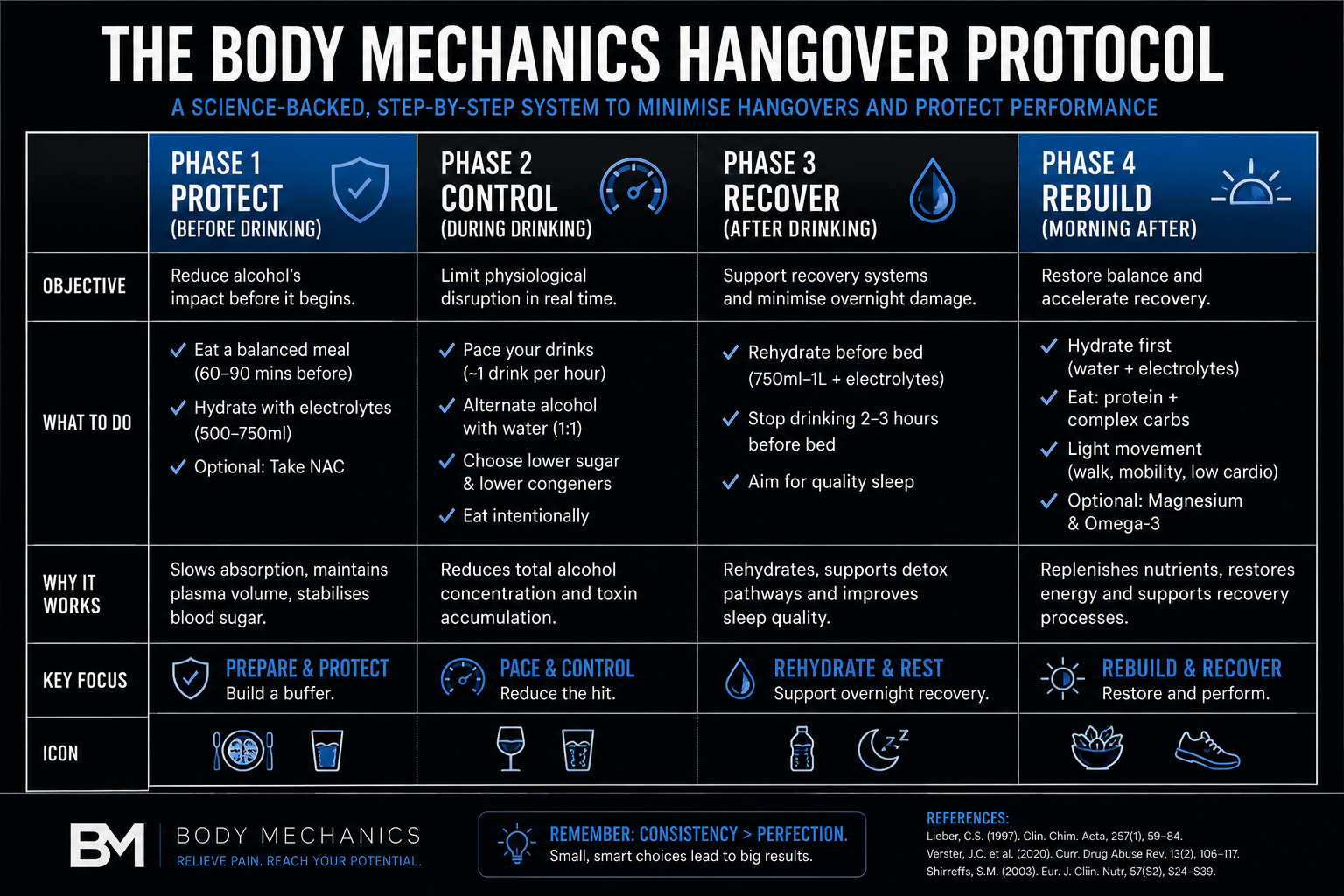
The Body Mechanics Hangover Protocol
Most people understand parts of recovery. Very few apply them consistently. The difference between knowing and doing is structure. At Body Mechanics, we simplify complex physiology into practical systems.
Phase 1: Protect Before Drinking
Eat a balanced meal 60 to 90 minutes before drinking: protein, healthy fats and complex carbohydrates
Pre-load with 500 to 750ml fluid plus electrolytes
Optional: consider NAC before drinking if suitable for you
Phase 2: Control During Drinking
Pace intake, remembering the body can only process alcohol at a limited rate
Alternate alcoholic drinks with water
Choose lower-sugar and lower-congener options where possible
Be aware of appetite and avoid high-fat binge eating
Phase 3: Recover Before Bed
Drink 750ml to 1L fluid with electrolytes
Stop drinking 2 to 3 hours before sleep where possible
Create a cool, dark sleep environment
Avoid using more alcohol as a sleep aid
Phase 4: Rebuild the Morning After
Hydrate first with electrolytes
Eat protein plus complex carbohydrates
Use light movement rather than punishment training
Consider magnesium, omega-3 and micronutrient-rich foods as support tools
Recovery Room Strategy
Sauna and ice baths can be useful recovery tools, but timing matters. Sauna may support relaxation and circulation, but it should be avoided if you are still dehydrated or feeling faint. Ice baths may improve alertness, but they are still a stressor. Use recovery modalities once hydration and food are back under control.
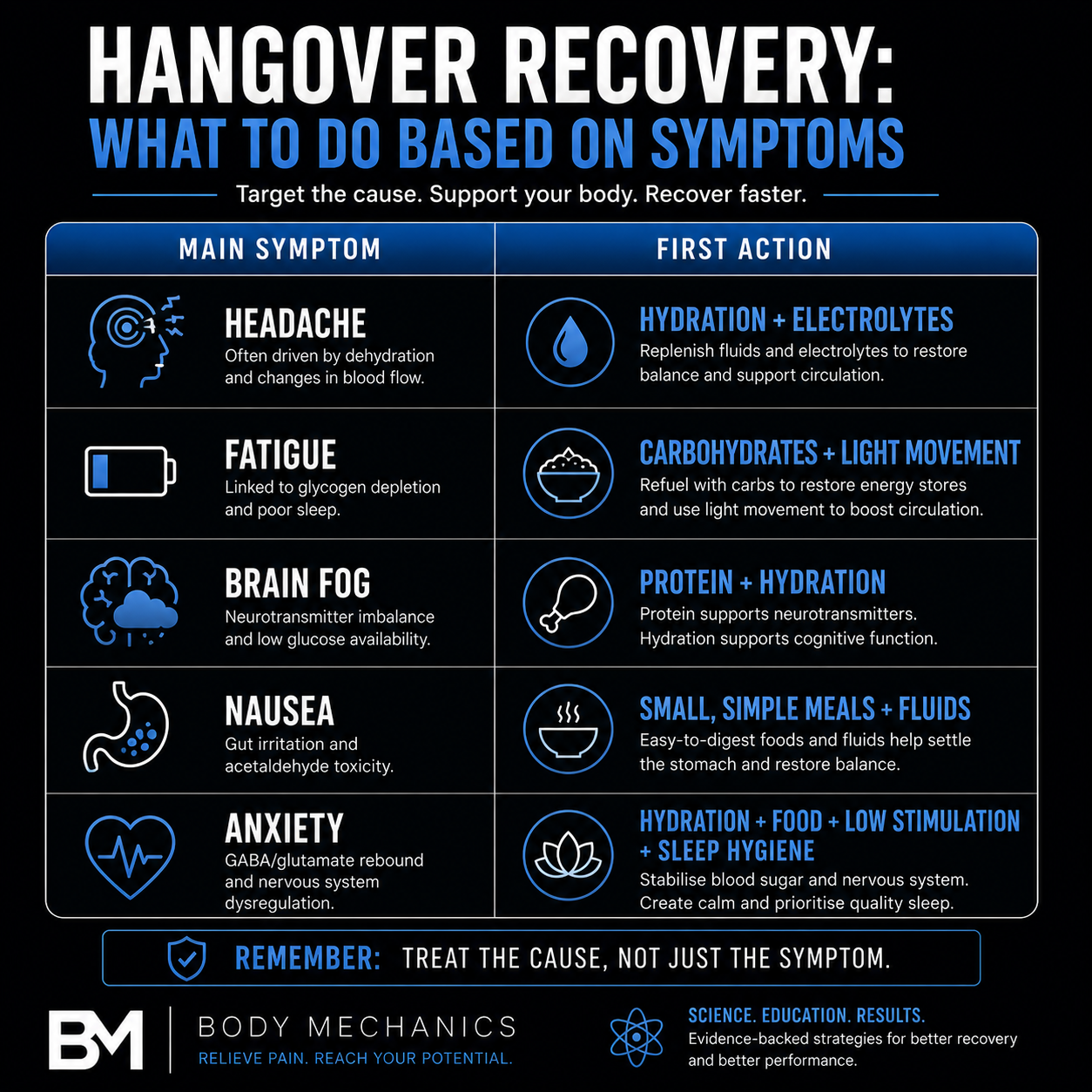
The Hangover Decision Guide
Myths That Need to Go
Myth 1: Greasy Food Cures a Hangover
It may feel comforting, but it does not accelerate alcohol clearance. Better recovery comes from hydration, electrolytes, protein, carbohydrates and sleep.
Myth 2: Hair of the Dog Works
More alcohol may temporarily delay discomfort by altering neurotransmitter activity, but it does not solve dehydration, inflammation or acetaldehyde-related stress. It postpones the problem.
Myth 3: Coffee Fixes Everything
Coffee can improve alertness, but it does not reverse alcohol’s effects. It can also worsen anxiety and stomach irritation if used before rehydration and food.
Myth 4: Supplements Can Cancel Alcohol Out
They cannot. Supplements can support recovery, but they do not erase the physiological cost of alcohol.
The Bigger Picture: Performance, Not Perfection
This is not about eliminating alcohol or living rigidly. It is about making informed decisions, minimising disruption and maintaining progress.
At Body Mechanics, this is what we stand for: control, awareness and consistency. Not restriction. Not extremes. Just better decisions repeated over time.
A hangover is not random. It is the result of dehydration, toxic byproduct accumulation, inflammation, blood sugar disruption, nervous system imbalance and poor sleep. When you understand this, you can work with your body, not against it.
Start Building a Body That Recovers Better
If you want to feel better, train smarter and recover properly, the fundamentals matter. Strength training, hydration, nutrition, sleep and intelligent recovery are not optional extras. They are the foundation of long-term health and performance.
At Body Mechanics, we help people relieve pain, move better and reach their potential through expert-led training, sports therapy and recovery support.
Start your 7-day free trial at Body Mechanics and experience a facility built around performance, recovery and real-world health.
This post is for informational purposes only and does not replace medical advice.
Written by Laurence Nicholson
Founder
Body Mechanics
References
Cederbaum, A.I. (2012) “Alcohol metabolism”, Clinics in Liver Disease, 16(4), pp. 667-685.
Hamilton, K.L. and Butt, A.G. (2013) “Glucose transport into the intestine”, Frontiers in Physiology, 4, article 53.
Lakićević, N. (2019) “The effects of alcohol consumption on recovery following resistance exercise: A systematic review”, Journal of Functional Morphology and Kinesiology, 4(3), p. 41.
Parr, E.B. et al. (2014) “Alcohol ingestion impairs maximal post-exercise rates of myofibrillar protein synthesis following a single bout of concurrent training”, PLOS ONE, 9(2), e88384.
Penning, R. et al. (2010) “The pathology of alcohol hangover”, Current Drug Abuse Reviews, 3(2), pp. 68-75.
Shirreffs, S.M. (2003) “Markers of hydration status”, European Journal of Clinical Nutrition, 57(S2), pp. S6-S9.
Swift, R. and Davidson, D. (1998) “Alcohol hangover: mechanisms and mediators”, Alcohol Health and Research World, 22(1), pp. 54-60.
Tipple, C.T. and Benson, S. (2017) “A review of the physiological factors associated with alcohol hangover”, Current Drug Abuse Reviews, 10(2), pp. 93-98.
Verster, J.C. et al. (2020) “The alcohol hangover research group consensus statement on best practice in alcohol hangover research”, Current Drug Abuse Reviews, 13(1), pp. 8-18.
Zakhari, S. (2006) “Overview: how is alcohol metabolized by the body?”, Alcohol Research and Health, 29(4), pp. 245-254.